


- Executive Summary
The Centre for Initiative and Development (CFID), with support from ViiV Healthcare through the Positive Action programme, implemented a community-based HIV intervention aimed at improving identification, linkage, retention, and viral suppression among children living with HIV, adolescents and young people (AYP), and caregivers in selected Local Government Areas (LGAs) of Taraba State, Nigeria.
The project responded to persistent gaps in paediatric and adolescent HIV outcomes, driven by stigma, poor access to services, weak retention systems, and sociocultural barriers. Using differentiated service delivery (DSD) models, task shifting, and strong community engagement, the project achieved high coverage of HIV testing, strong linkage to care, an 86% retention rate, and a viral suppression rate of 94.7% among clients with valid viral load results.
Overall, the project demonstrates that community-led, people-centred HIV care models can achieve outcomes consistent with global best practices, even in hard-to-reach and resource-limited settings.
- Background and Rationale
Nigeria bears a significant burden of paediatric and adolescent HIV. In Taraba State, challenges such as limited access to child-friendly services, stigma and discrimination, poor confidentiality practices, weak follow-up systems, and geographical barriers have contributed to low testing uptake and poor retention in care.
Evidence from WHO and UNAIDS underscores the effectiveness of differentiated service delivery models, community-based testing, and psychosocial support in improving HIV outcomes among vulnerable populations. This project was therefore designed in alignment with WHO-recommended approaches to address both demand- and supply-side barriers to HIV care.
- Project Goal and Objectives
3.1 Goal
To identify children and caregivers living with HIV who were not on treatment, enrol them into care, and support sustained retention and viral load suppression through differentiated models of care, including mental health services.
3.2 Specific Objectives
- To diagnose at least 80% of caregivers and 90% of children living with HIV who were previously undiagnosed through targeted community-based testing.
- To enrol and retain 70% of caregivers and 80% of children diagnosed with HIV on treatment and support them to achieve viral suppression.
- To strengthen the capacity of 22 healthcare workers and 32 community volunteers to deliver stigma-free, high-quality HIV services.
- Project Setting and Target Population
4.1 Geographic Coverage
The project was implemented in 14 communities across three LGAs in Taraba State:
- Karim-Lamido LGA
- Sardauna LGA
- Ussa LGA
4.2 Target Population
- Children aged 0–14 years
- Adolescents and young people aged 15–24 years
- Caregivers of children living with HIV
- General community members
- Implementation Strategy and Key Interventions
5.1 Community Entry and Stakeholder Engagement
Community mapping and advocacy meetings were conducted to identify service gaps, high-risk populations, and sociocultural dynamics influencing HIV service uptake. Engagement with traditional rulers, religious leaders, and government stakeholders fostered community ownership and reduced resistance to HIV services.
5.2 Capacity Building
A total of 76 service providers were trained, including healthcare workers and community volunteers. Training focused on HIV testing services, counselling, adherence support, confidentiality, stigma reduction, data management, and differentiated service delivery.
5.3 Active Case Finding and HIV Testing
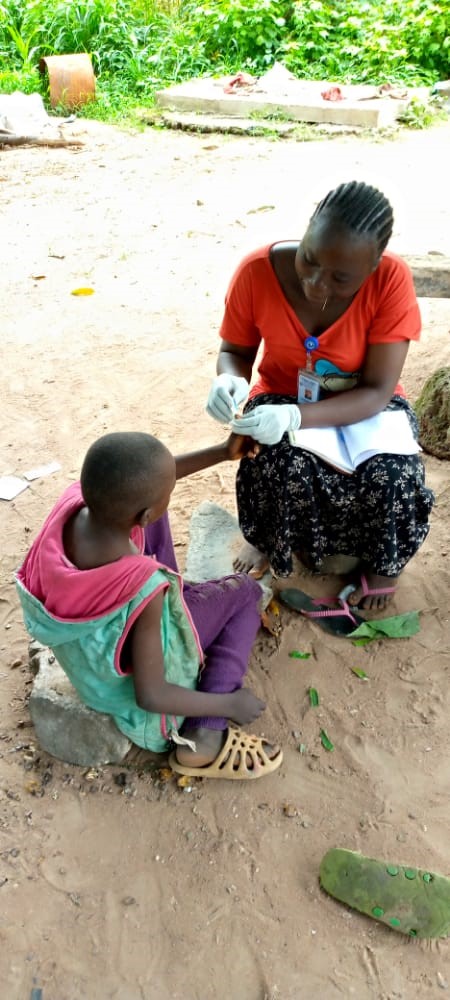
Targeted community-based testing strategies were implemented, including home-based testing and outreach campaigns. These strategies prioritized children, adolescents, and caregivers who were less likely to access facility-based services.
5.4 Differentiated Service Delivery and Task Shifting
Nurse-led community clinics and task shifting were adopted for stable and uncomplicated cases. Community volunteers supported follow-up, adherence counselling, ARV delivery, and viral load sample collection, reducing facility congestion and improving retention.
5.5 Psychosocial and Mental Health Support
Integrated psychosocial support services addressed fear, stigma, and treatment fatigue. Mental health support was provided during home visits and follow-up sessions.
5.6 Monitoring, Evaluation, and Data Quality
WHO-aligned monitoring and evaluation tools and standard operating procedures were adopted to ensure data quality, consistency, and evidence-based decision-making.
- Results
6.1 Reach and HIV Testing
- Total individuals reached: 45,823
- Total individuals tested for HIV: 8,990
6.2 HIV Case Identification and Linkage
- HIV-positive cases identified: 233
- Linkage to treatment services: 163
- Linkage rate: 70%
6.3 Retention in Care
- Clients retained in care: 143
- Retention rate: 86%
6.4 Viral Load Coverage and Suppression
- Viral load coverage: 80.4%
- Clients with valid viral load results: 94
- Viral suppression rate: 94.7%
6.5 Service Provider Capacity
- Service providers trained: 76
- Key Outcomes and Impact
The project resulted in improved early diagnosis among children and adolescents, enhanced treatment adherence, reduced stigma, strengthened community health systems, and improved quality of life for beneficiaries. High viral suppression rates contributed to reduced community-level HIV transmission and progress toward epidemic control.
- Challenges and Mitigation Measures
Key challenges included hard-to-reach terrain, population mobility, sociocultural resistance, and human resource constraints. These were mitigated through community-based service delivery, task shifting, stakeholder engagement, and flexible follow-up mechanisms.
- Sustainability and Lessons Learned
Embedding services within existing community and health system structures enhanced sustainability. Key lessons include the importance of trust-building, community ownership, and integration of psychosocial support into HIV care.
- Conclusion
The CFID ViiV-supported project achieved outcomes aligned with WHO-recommended HIV service delivery standards. The results demonstrate that community-led, differentiated HIV care models can substantially improve paediatric and adolescent HIV outcomes and are suitable for scale-up in similar settings.
- Acknowledgements
CFID acknowledges the support of ViiV Healthcare, Taraba State Ministry of Health, LACA, TACA, healthcare workers, community volunteers, and participating communities.
Annex 1: Results Framework and Key Performance Indicators (KPIs)
Table A1.1: Project Reach and HIV Testing Outcomes
| Indicator | Children (0–14) | AYP (15–24) | Caregivers | General Population | Total |
| Individuals reached | 2,675 | 2,591 | 1,509 | 2,215 | 8,990 |
| Individuals tested for HIV | 2,675 | 2,591 | 1,509 | 2,215 | 8,990 |
Table A1.2: HIV Case Identification and Linkage to Care
| Indicator | Children (0–14) | AYP (15–24) | Caregivers | General Population | Total |
| HIV-positive cases identified | 22 | 42 | 71 | 98 | 233 |
| Linked to treatment and care | 19 | 42 | 32 | 70 | 163 |
| Linkage rate (%) | – | – | – | – | 70% |
Table A1.3: Retention in HIV Care
| Indicator | Children (0–14) | AYP (15–24) | Caregivers | General Population | Total |
| Retained on treatment | 14 | 42 | 32 | 55 | 143 |
| Retention rate (%) | – | – | – | – | 86% |
Note: Non-retention was primarily due to population mobility, including refugee return and internal displacement.
Table A1.4: Viral Load Coverage and Suppression
| Indicator | Children (0–14) | AYP (15–24) | Caregivers | General Population | Total |
| Viral load samples collected | 10 | 39 | 29 | 37 | 115 |
| Valid viral load results | 11 | 32 | 20 | 31 | 94 |
| Virally suppressed | 8 | 32 | 20 | 28 | 88 |
| Viral suppression rate (%) | – | – | – | – | 94.7% |
Table A1.5: Capacity Building and Health System Strengthening
| Indicator | Result |
| Healthcare workers trained | 22 |
| Community volunteers trained | 54 |
| Total service providers trained | 76 |
Annex 2: Summary Outcome Indicators
| Outcome Indicator | Result |
| HIV prevalence rate among tested population | 2.6% |
| Linkage to treatment rate | 70% |
| Retention in care rate | 86% |
| Viral load coverage | 80.4% |
| Viral suppression rate | 94.7% |
All indicators were monitored using nationally validated and WHO-aligned monitoring and evaluation tools.
Below are some means of verification for the activities carried out:
Privacy/Confidentiality Disclosure: CFID Obtained the Permission of each Individuals presented in the Photograph for all Publications
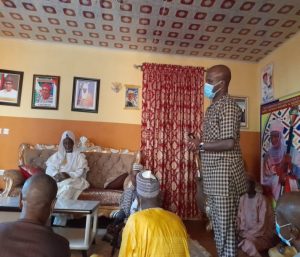
Advocacy visits with key stakeholders in Gembu, Sardauna LGA
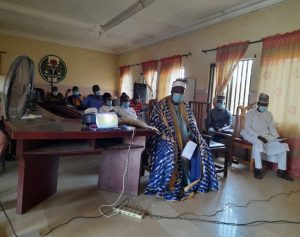
Town Hall meeting with key stakeholders in USSA LGA

Client’s enrollment
Testing (Active case finding)
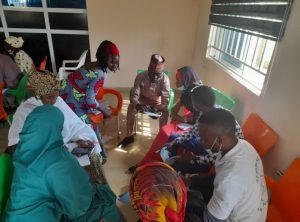
Group discussion during training of Community Volunteers

Group discussion by volunteers during the Training of Community volunteer

M&E Tools