


Background
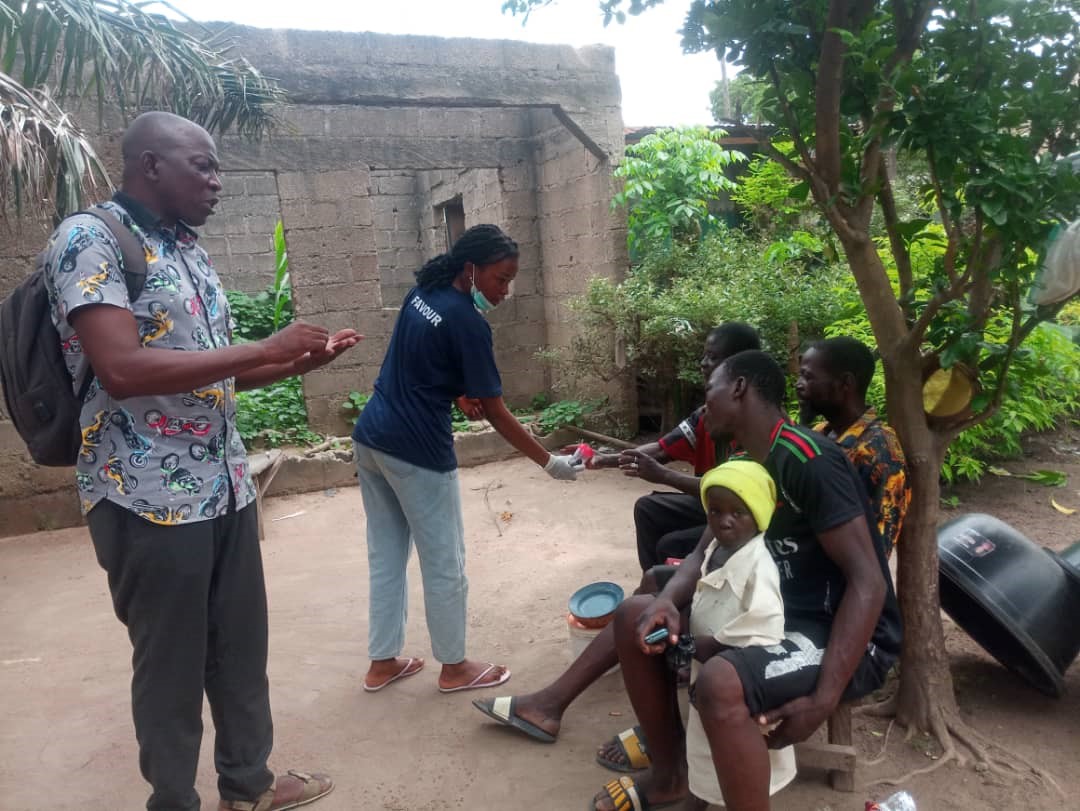
Tuberculosis (TB) continues to pose a significant public health challenge in Nigeria, particularly among underserved and hard-to-reach populations. In response to this burden, the Centre for Initiative and Development (CFID), with support from REDAID Nigeria, implemented an intensive community-based TB case-finding intervention aimed at enhancing early detection, diagnosis, and linkage to treatment.
The intervention focused on proactive community engagement, targeted outreach activities, door-to-door screening, and efficient sample collection and transportation to designated laboratories. These efforts ensured that individuals presenting TB symptoms were promptly identified and supported through the diagnosis and treatment pathway.
Community-Based TB Case-Finding Approach
CFID adopted a people-centered and community-driven approach to TB case finding. Trained Community TB Workers and volunteers conducted TB sensitization and screening activities directly within communities, ensuring services reached individuals who might otherwise face barriers to accessing health facilities.
Strategic outreach activities were aligned with key health events, including Childhood TB Week and World AIDS Day, which significantly expanded program reach and community engagement.
 Key strategies included:
- Community outreach for TB awareness and health education on signs and symptoms
- Systematic TB screening at the community level using the CommTB application
- Identification and sample collection from presumptive TB cases
- Support for diagnostic evaluation at designated health facilities
- Linkage of confirmed TB patients to treatment and care services across target Local Government Areas (LGAs)
Results and Achievements
The TB case-finding intervention demonstrated strong performance across all target LGAs, with consistent implementation from May through December.
Community TB Screening
Across six LGAs, CFID successfully screened a total of 30,374 individuals for TB at the community level. Lau LGA recorded the highest screening output with 13,712 individuals, followed by Jalingo (6,479) and Zing (2,996).
This extensive coverage demonstrates CFID’s capacity to reach diverse populations through sustained community engagement and outreach activities.
Identification of Presumptive TB Cases
Community screening activities identified 11,998 presumptive TB cases. Lau LGA accounted for the largest share with 7,451 presumptive cases, while Jalingo recorded 2,691 cases. This high yield reflects the effectiveness of symptom screening protocols and heightened community awareness regarding TB.
TB Diagnosis and Case Detection
Diagnostic evaluation confirmed 822 TB cases across the project LGAs. Lau LGA contributed the highest number of diagnoses (536 cases), followed by Jalingo (185 cases) and Ardo-Kola (58 cases). These results significantly exceeded program targets and made a substantial contribution to TB case notification in the state.
Linkage to Treatment
A total of 819 diagnosed TB patients were successfully linked to treatment, with three individuals lost between diagnosis and treatment initiation. One patient died before laboratory results were available, while two others declined enrollment despite intensive follow-up efforts by CFID Community TB Workers and LGA TB Supervisors.
 This achievement underscores CFID’s robust referral systems, patient tracking mechanisms, and strong collaboration with health facilities.
Impact on Communities
By bringing TB services closer to communities, the intervention achieved the following outcomes:
- Enhanced early detection of TB cases
- Reduced delays in diagnosis and treatment initiation
- Strengthened community awareness and ownership of TB prevention and care
- Contributed to interrupting the chain of TB transmission
The 99% linkage rate of diagnosed TB patients to treatment demonstrates CFID’s commitment to patient-centered care and health system strengthening.
Lessons Learned
- Community-based screening is highly effective in identifying undiagnosed TB cases
- Strong collaboration with health facilities is critical for timely evaluation and treatment
- Continuous community engagement enhances trust and participation in TB programs
Conclusion
The TB case-finding intervention demonstrates that targeted, community-focused strategies can significantly improve TB detection and treatment outcomes. By exceeding program targets and ensuring seamless linkage to care, CFID continues to make meaningful contributions to national TB control efforts and the goal of ending TB in Nigeria.
CFID remains committed to expanding access to quality TB services and improving health outcomes for vulnerable populations.
Prepared by:
Bantar Helmina, SM&E Officer
Date: 15/01/2026
Reviewed by:
Rijimra Ande, Senior Program Officer (SPO)Date: 15/01/2026