


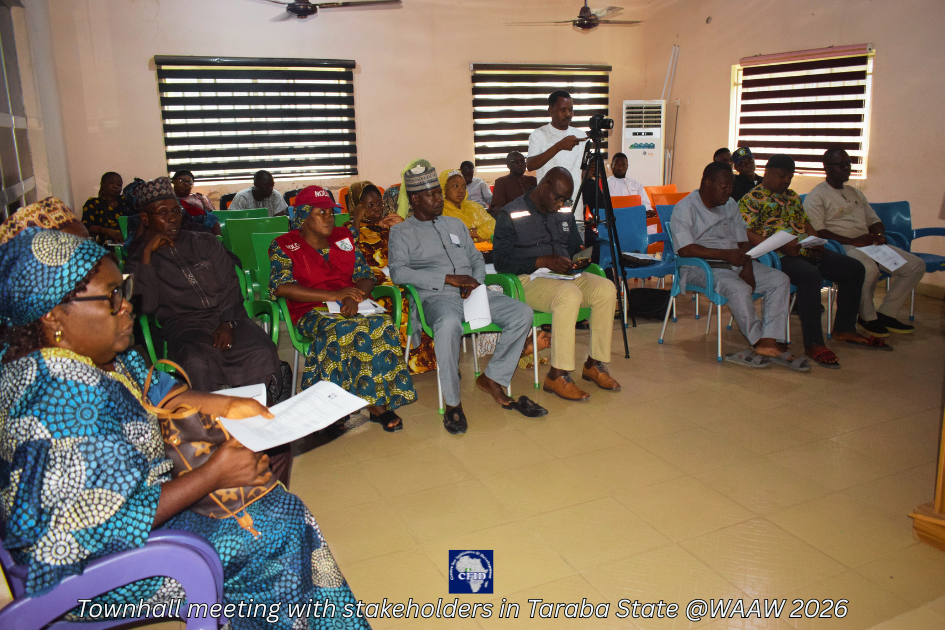
Antimicrobial resistance (AMR) is one of the most serious public health threats of our time. It makes common infections harder to treat, raises the cost of care and puts lives at risk in people, animals and the environment. During World Antimicrobial Resistance Awareness Week (WAAW) 2026, the Centre for Initiative and Development (CFID), working with the Taraba State Antimicrobial Resistance Technical Working Group (AMR TWG), brought leaders from many sectors together to ask what must change in Taraba State and who must act.
 On Tuesday, 24 November 2026, CFID convened a Multi-Sectoral One Health Stakeholder Engagement AMR Town Hall Meeting in Taraba State, Nigeria. It was held under the global theme “One Health, One Action: Prevent AMR Now.”
Participants included:
- Taraba State Ministry of Health, Directorate of Public Health and the State AMR TWG
- World Health Organization (WHO)
- State Malaria Elimination Programme
- National Drug Law Enforcement Agency (NDLEA)
- National Association of Patent and Proprietary Medicine Dealers (NAPPMED)
- Livestock Productivity and Resilience Support Project (L-PRESS)
- Taraba State Specialist Hospital and other healthcare professionals
- Civil society organisations and community networks, including NEPWHAN, NKPHRN and Natomu Charity Foundation
- Academia, schools and media organisations
This mix reflects the One Health approach, which recognises that human, animal and environmental health are connected and that AMR cannot be tackled by one sector alone.
CFID’s Community Antimicrobial Stewardship Model Recognised by WHO
A major highlight was the inclusion of CFID’s Community Antimicrobial Stewardship (CAMS) model in the WHO publication Civil Society Success Stories on AMR.
The CAMS model improves responsible antibiotic use through school-based peer education, community mobilisation, engagement of medicine vendors, media advocacy and operational research. Its reach so far includes:
- 6 states, 12 Local Government Areas and 48 communities
- 63 schools engaged and 63 teachers trained
- 252 student peer educators trained, with 4,080 students graduating from peer education cohorts
- Over 400 community pharmacists and patent medicine vendors trained
- A media audience of over 116,000 people
CFID’s hospital antimicrobial stewardship work has also covered 14 hospitals and strengthened the capacity of over 1,000 healthcare professionals.
Ahead of the town hall, CFID held AMR sensitisation sessions on 19 and 20 November 2026 in four Jalingo schools: Government Day Secondary School Magami, Government Day Secondary School Nukkai, Government Day Secondary School Howai and Eastfield Imperial School. Young people are powerful agents of change in their schools, homes and communities, and these sessions aimed to build AMR champions among them.
Key Issues Raised by Stakeholders
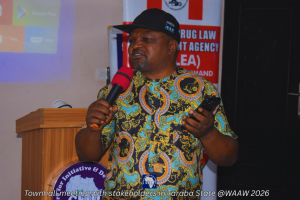
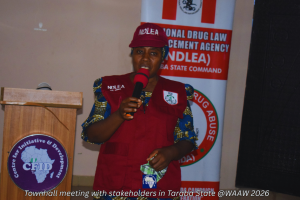
The interactive town hall gave participants room to speak candidly. The main challenges were:
- Governance and financing: Limited government ownership and funding for AMR work.
- Diagnostics and surveillance: Delays in laboratory results, limited access to diagnostic services and weak sharing of microbiology data with clinicians.
- Medicine use and supply: Self-medication, medicine sharing, non-prescription dispensing and concerns about the quality of medicines.
- Animal health: Unsupervised antibiotic use by livestock and poultry farmers.
- Community engagement: Too little targeted awareness among women, children, rural communities and vulnerable populations.
- Media involvement: Too little structured collaboration with media organisations.
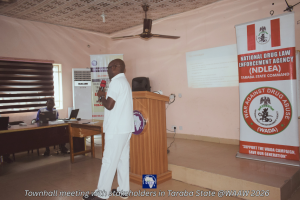 During the discussion, the Director of Public Health confirmed with the responsible budget official that AMR is not currently captured in the relevant state budget. The Director committed to facilitating its inclusion in subsequent budgeting processes. Participants noted that budget inclusion must be followed by timely release and proper use of funds if it is to make a difference.
What Stakeholders Agreed to Do
The meeting produced practical recommendations:
- Integrate AMR into existing programmes such as malaria, HIV, primary healthcare and community outreach, to save cost and improve sustainability.
- Strengthen laboratories and surveillance, including faster results and better sharing of data with clinicians.
- Promote responsible antimicrobial use in human and animal health, supported by quality-assured medicine supply.
- Expand community awareness to women, children, young people, people living with HIV and other vulnerable groups, working with religious and traditional leaders.
- Partner with the media for regular radio programmes and accurate messages in local languages.
- Report quarterly, with each institution sharing AMR activities and progress at State AMR TWG meetings.
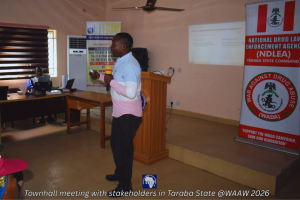
Participants were also challenged to sensitise at least ten people each by 30 November 2026 and to ask those people to pass the message on.
Fighting AMR starts with everyday choices:
- Take antibiotics only when prescribed by a qualified health professional.
- Never self-medicate or share medicines.
- Complete the full course of any prescribed treatment.
- Wash your hands often and keep your surroundings clean.
- Farmers should use antibiotics in animals only under veterinary guidance.
- Share accurate AMR information with your family, friends and community.
Moving Forward
The WAAW 2026 town hall showed that Taraba State has a strong foundation in its State AMR TWG, community and hospital stewardship programmes and growing multi-sectoral partnerships. Turning commitments into results will depend on political ownership, dedicated funding, coordination and accountability.
CFID thanks the Taraba State Ministry of Health, the State AMR TWG, WHO, all partners, the media and every participant for their contributions. AMR prevention cannot end with one awareness week. It must become part of our daily institutional and community work.
One Health, One Action: Prevent AMR Now.
Photo credit: Emmanuel Nicodemus